
Fearless Flowers - a community at project.


For International Women’s Day 2020, the Fearless Flowers Project is raising funds for research into Ovarian Cancer. Every year in Australia, 1600 women are diagnosed with Ovarian Cancer and 1000 die. Hunter (NSW) researchers are involved in cutting edge work to improve this mortality rate but they need our financial support. 
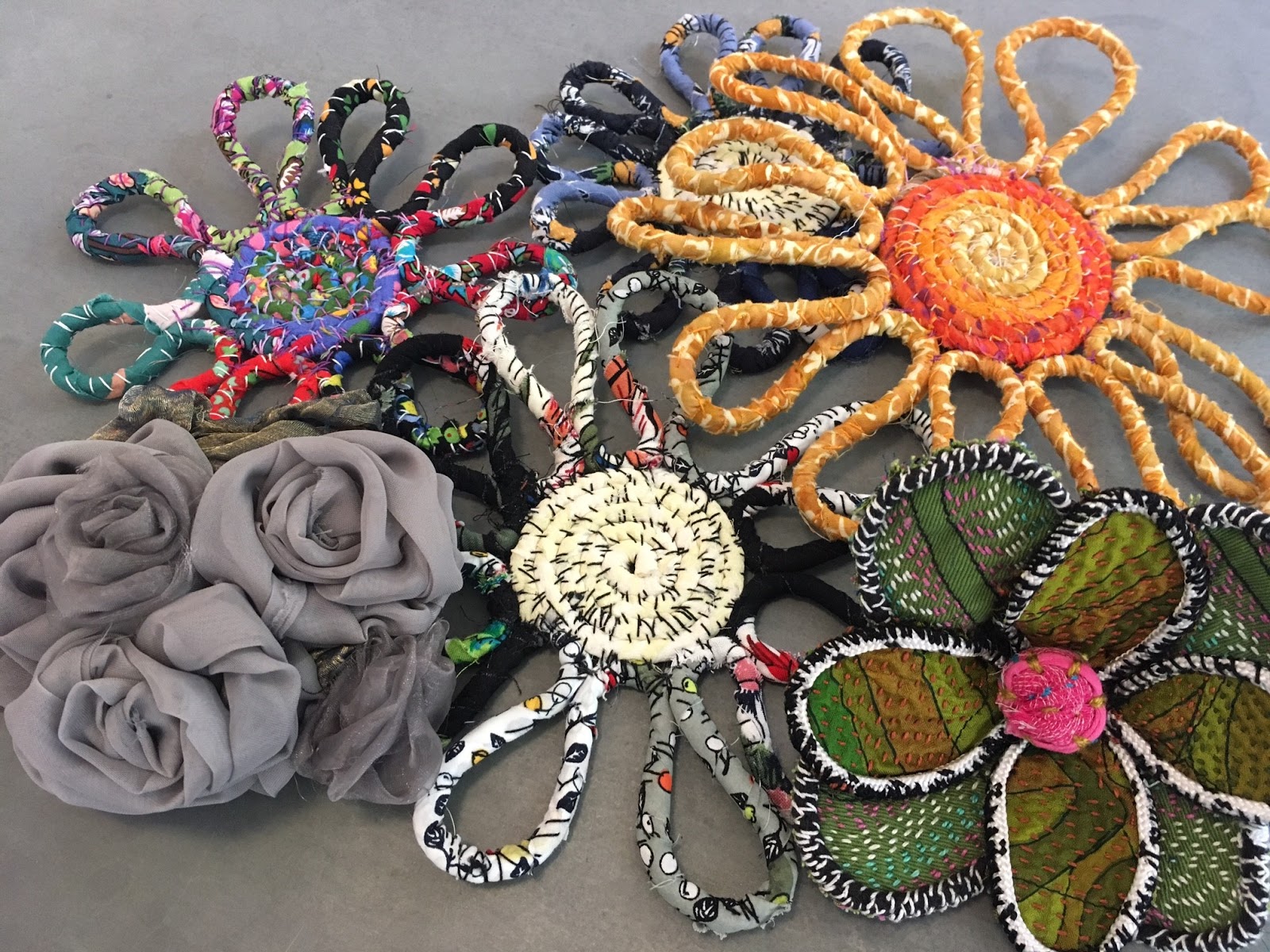
In Newcastle (NSW, Australia) an group of artists meets every Wednesday at the fibre art gallery, Timeless Textiles in Hunter Street, Newcastle East. The Wednesday Group  will be making fibre/textile flowers and they will bloom and be sold amongst the Norfolk pines outside the gallery on 8 March 2020 . 

 Timeless Textiles and the Wednesday group's previous International Women's Day Projects raising funds for various local  and overseas causes have been: 

  • Spreading Wings 
  • Prayer Flags for Peace 
  • Stitch-a-thon for White Ribbon 
  • Letting Go
  • Flying Free 
  • Out of the Wood 


In the past few years, through the sales of  our art, we  have donated over $50,000  to support  women's refuges, anti-violence programs, tertiary education for disadvantaged women.  This year, 2019, we have just donated $3,000 to Our Backyard, a car to home project which offers homeless individuals and families a safe parking space, kitchen and bathroom as well as offering support to transition to more permanent accommodation. 

Please join  our new and current project and make some fearless flowers to raise much needed funds for medical research - Wednesdays at Timeless Textiles, 90 Hunter Street Newcastle , 10.30am - 12.30pm or send some of your own fearless flowers to us to help us improve the life expectancy of women suffering from Ovarian Cancer. For more information, contact  Anne or Wilma via the Timeless Textiles website


Comments

Popular posts from this blog

Countdown to Christmas 20 - Fruitcake song!

There are many songs about fruit cakes  - not all of them referring to the Christmas cake we know and love.It is really surprising to learn via Google that there are 89 listed songs with references to Christmas cake or fruit cake - not all of them complimentary.   Probably one of the most famous folk songs about Christmas cake is Miss Fogarty's  Christmas Cake (a favourite sung by The Irish Rovers).  This first recorded comical Christmas song was written by C Frank Horn in 1883 in Pennsylania, as a variation of an Irish folk song, 'Miss Mulligan's Christmas Cake' . The chorus might give you the hint that Miss Fogarty's cake was not for the faint hearted or those who suffered from a weak stomach.    Chorus : There were plums and prunes and cherries, There were citrons and raisins and cinnamon, too There was nutmeg, cloves and berries And a crust that was nailed on with glue There were caraway seeds in abundance Such that...

Christmas Countdown 15 : Christmas Tree #11 - Disposable

Plastic cups  https://littlebinsforlittlehands.com/christmas-stem-ideas-kids/ Advent Blog : Day 11 - Disposable  We are all so much more conscious about ridding our landfills and oceans of plastic waste. For Christmas, here is a way to use up some of those disposable items which seem to multiply at holiday parties and celebrations, or perhaps you have just been saving them up for a creative use.... Who would have thought coffee pods would make such stylish Christmas trees ? ... Add caption If you don't have one of those machines, then perhaps you have coffee on the run - Starbucks or Nescafe ?  from  https://www.pinterest.com.au/pin/369858188126737920/ Nescafe cups https://www.pinterest.com.au/pin/72761350208620530/ The disposable cups don' t have to be brand names to work well as materials for Christmas trees. Taking an engineering approach to plastic cup trees seems to be the answer for a more ornate result.  from  https:...

"Temari Or Not Temari?" Tutorial

 Background Information:  Temari (literally translated “hand ball”) is a Japanese folk craft that is alleged to have originated in China and was introduced to Japan five or six hundred years ago. Traditionally, the balls were constructed from wrapped kimono fabric remnants and silk threads. They were made by mothers and grandmothers for children to play with. Nowadays, decorative embroidered temari represent a highly valued and cherished gift symbolizing friendship and loyalty. Recently I've wondered if your don't use traditional techniques whether you should call what you create "temari". That is an ongoing debate but today I share what I do to make a "non-traditional temari".... 1.I start  with a polystrene ball ( traditionally the balls were wound  silk scraps or other organic materials) and begin to wrap with approx 4 ply wool, turning the ball as I wrap.  2. I then wrap another layer of wool in a similar fashion , this time a 3 or 2 ...