Felted Fallalery and Homeless Bags


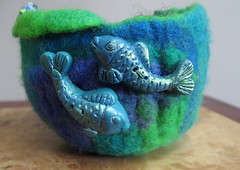
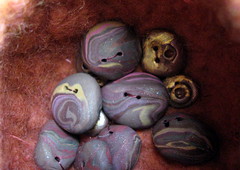
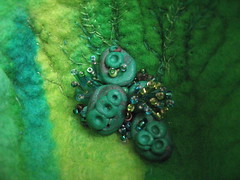
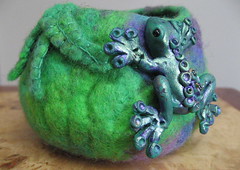
What is fallalery? It is the using and making of fallals (trifling, decorative ornaments). This was the basis of my talk at NCEATA – Newcastle Creative Embroiderers and Textile Artists on Saturday. I have recently joined this group and will be one of the tutors at their Creative Retreat in May 2010. I am offering a workshop called “Felted Fashion and Fallalery”. The felted art bowls in the photos are samples for the workshop where participants will create beautiful handmade felt for fashion accessories and jewellery and/or decorative art pieces like these bowls or art dolls and embellished them with handmade polymer clay pieces, buttons, beads and embroidery. More information from NCEATA website


Second episode of the Homeless Day - packing night was last Sunday., the hottest day of the year so far. I don’t think it needs too much explanation About 20 Rotarians friends came to our place , brought more donations, packed 250+ daily essentials packs and made up beautiful "hampers" to be distributed at the Hunter Homeless Connect day. Each pack has a towel, toothbrush, toothpaste, shampoo, soap, other toieltries, underpants , tissues, bottle of water, and a few other useful bits and pieces. Nicola, a young member of my Rotary club is one of the coordinators and sent this message “. On behalf of the Hunter Homeless Connect Day organisers and guests, my thanks to Rotarians for your efforts in collecting and packing goods for our special day this week, and the gorgeous hampers which will bring extra joy to a few who are probably not used to being 'winners'.   Thanks of course for your own generous donations and to your suppliers for their care for those in tough times.  “


and a last reminder about the fantastic HANDMADE TREASURES CHRISTMAS SALE
  Saturday, 28th November, 8.30am - 5.30pm

Comments

Popular posts from this blog

"Temari Or Not Temari?" Tutorial

 Background Information:  Temari (literally translated “hand ball”) is a Japanese folk craft that is alleged to have originated in China and was introduced to Japan five or six hundred years ago. Traditionally, the balls were constructed from wrapped kimono fabric remnants and silk threads. They were made by mothers and grandmothers for children to play with. Nowadays, decorative embroidered temari represent a highly valued and cherished gift symbolizing friendship and loyalty. Recently I've wondered if your don't use traditional techniques whether you should call what you create "temari". That is an ongoing debate but today I share what I do to make a "non-traditional temari".... 1.I start  with a polystrene ball ( traditionally the balls were wound  silk scraps or other organic materials) and begin to wrap with approx 4 ply wool, turning the ball as I wrap.  2. I then wrap another layer of wool in a similar fashion , this time a 3 or 2 ...

Fish and Sticks : Art Dolls

This week I've been working on fish and sticks ....  The sticks are the message stick art dolls which were very popular, attracting some attention and a few orders at the Wise Women exhibition. Each of the message stick dolls are from the Wise Women series, each with her own personality and  message of wisdom, handwritten on a handmade timber tag. I gather the sticks during my walks around my neighbourhood and the tags are made from special bits of timber, some collected by me or  my husband or from off cuts gifted to us  from another doll making friend whose husband makes bagpipes. These dolls start off very simply with a wrap around a stick, in the general shape of a body. 'Naked" message stick dolls - strips of wadding wrapped around found sticks.   Then I usually wrap other layers of fabric, wool, and/or fibres, over which I do some simple embroidery. I sculpt  or mould small face masks for these dolls. I really like using "sari ribbon" as w...

Wednesday's Child /2

Work in Progress - 3 of the 193 for "Stitched Up"- Wilma Simmons   The work for the "Stitched Up " Project  continues. See the previous "Wednesday Child" post for the background to this art project celebrating the 150th anniversary of the Newcastle Industrial School. I have been documenting the progress of my work, so I thought it might be interesting to share some of the early stages of the "stick dolls" ... Here are some of the beginning steps.. Sticks collected while walking the bushland in my neighbourhood  Drying and getting rid of any insects - oven heat 75 degreesC for approx 1-2 hours.  Trimmed and cut if necessary  Ends sealed with matte sealing solution.  Drying  - solution goes on white but dries clear.  First wrapping - foil to create a body shape  Second wrapping - stretch fabric.  Third wrapping - fabric strips  Some stitching - more stitching and embellishment to ...